——When Space Speaks in Numbers
In architecture, some of the most tense moments happen not in a design review but on site—checking whether drawings align with reality. A staircase might or might not fit; daylight might or might not fall where it should. A few centimeters can decide the outcome. That fragile gap between idea and execution reminds us that design depends as much on numbers as on imagination. As MILESEEY TOOLS puts it, measurement shouldn’t just record numbers—it should kick-start collaboration and design.
The Hidden Weight of Measurement
For decades, site measurement meant tapes, notebooks, and careful transcription. Errors were common—digits misread, notes misplaced—and each mistake grew more expensive the further it traveled into a project. Contractors issued change orders, designers revised drawings, and clients lost trust.
 The irony is that measurement, while so fundamental, was often invisible in design culture. Studios celebrated sketches, models, and renderings, while site notes were tucked away in binders. Measurement was treated as a chore, a checkpoint before the “real” creative work began. Yet the entire project rested on those humble figures. The scaffolding of creativity was always numeric, even if few cared to admit it.
This invisibility also shaped education. Architectural schools rarely taught measurement techniques in depth. Students graduated fluent in concept and representation, but often underprepared for the messy, error-prone task of capturing existing conditions. As a result, many young architects discovered—usually painfully—that a single missed centimeter could derail weeks of design.
The pressure is not limited to accuracy. Traditional measurement workflows also slow down creativity. Every sketch or idea must pause while someone confirms a dimension, then re-enters it into a drawing later. That lag between thought and confirmation discourages iteration. Instead of asking “what if,” designers often settle for “what fits.”
When Numbers Go Digital
That perception is changing. Digital tools collapse the gap between measurement and design. A laser device no longer just produces a number—it sends that data straight into a phone, a drawing, or even a shared BIM model. Instead of scribbles in a notebook, dimensions now appear annotated on site photographs, tagged in sketches, and instantly available for collaboration.
This immediacy changes behavior. Architects can test design options in real time, adjusting confidently without pausing to double-check. Miscommunication shrinks because numbers are shared in context: everyone sees not just the figure but where and how it was taken.
Devices like the MILESEEY D9Pro, a smart measure for designers, illustrate this shift. A wall is measured, the data syncs to a phone, and by the time an architect leaves the site, the numbers are organized, shared with stakeholders, and ready for design use. For small studios, this efficiency is transformative; for larger projects, it tightens coordination between diverse teams.
The soon-to-be-released MILESEEY long-distance multifunction green-beam laser distance meter (400-foot range, multiple modes) extends accuracy to industrial sites and large urban contexts while staying flexible for interior work. Just as important, it emphasizes efficient data transmission and cross-team collaboration, so precision flows seamlessly into the creative process rather than stalling it.
BIM integration magnifies the impact. Measurements can now be uploaded to shared 3D models in real time, reducing the friction between fieldwork and design development. A structural engineer reviewing the same file can verify loads; a sustainability consultant can test daylighting assumptions—all based on numbers captured hours earlier on site.
The pandemic accelerated this evolution. Remote collaboration meant clients, contractors, and consultants often relied on shared digital files rather than in-person walkthroughs. In this context, trustworthy measurements became a bridge, allowing dispersed teams to build confidence without standing in the same room.
In practice, this shift reshapes everyday workflows. A small studio that once carried rolls of marked-up drawings back to the office can now upload site measurements instantly, returning with a model already in progress. During client meetings, designers adjust layouts on the spot using live data rather than postponing decisions. This immediacy speeds iteration, strengthens trust, and keeps every stakeholder aligned around the same verified numbers.
Imagination Grounded in Data
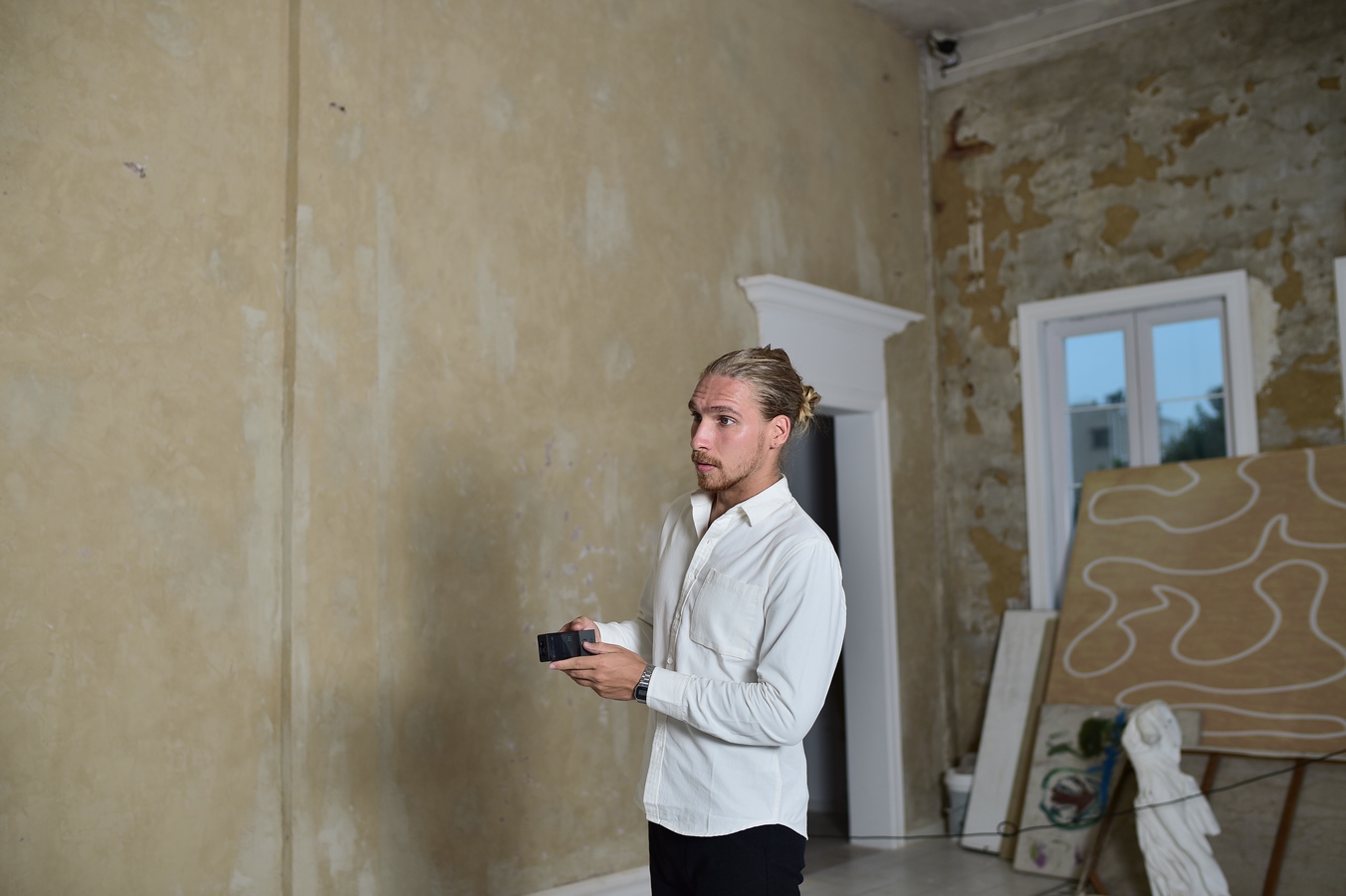 The deeper shift is cultural. Measurement, once hidden in the background, is becoming central to design thinking. When numbers flow directly into the creative workflow, the boundary between site and studio blurs. Feedback loops shorten from weeks to hours. Designers gain freedom to experiment boldly, knowing their baseline is solid.
This also levels the field. Precision is no longer a privilege of large firms with extensive surveying teams. Freelancers and small practices can now build with the same accuracy and speed. Clients, too, experience data differently: a dimension is no longer an abstract figure but a clear note tied to the very space they will inhabit.
One striking effect is on sustainability. Data-rich measurements allow designers to calculate energy performance, daylight penetration, and material efficiency with far greater confidence. Retrofits become easier to plan, since existing conditions can be documented quickly and accurately. In a world increasingly committed to reuse rather than rebuild, this capacity is essential.
Looking ahead, the tools themselves are evolving. Integration with AI and IoT sensors is already on the horizon. Imagine a site where every beam and surface is continuously scanned, updating a live digital twin as construction proceeds. The architect does not just measure once but inhabits an ever-accurate model of the building as it grows.
Such technologies may feel futuristic, but their logic is already present. The shift is less about new gadgets than about a new mindset: numbers are no longer static records but active participants in the design dialogue.
For designers, this brings liberation. Freed from the anxiety of hidden errors, they can focus on storytelling, atmosphere, and human experience. For clients, it brings trust: the promise that what is imagined on paper will stand true in space. For the profession as a whole, it signals a rebalancing—creativity grounded not in guesswork but in clarity.
What emerges is not the replacement of imagination with measurement, but a partnership. Numbers provide the ground on which ideas can rise. By turning measurement from a checkpoint into a catalyst, digital tools don’t just make design more accurate—they make it more confident, collaborative, and inventive.